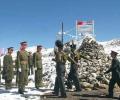
Many of them sustained minor injuries in the clash near Naku La in the Sikkim sector along the Sino-Indo border on Saturday

Gen Pande also said that Indian troops are adequately deployed along the Line of Actual Control to deal with any situation and that guidance has been given to them to "remain firm and resolute" in their tasks.

The relations between India and China cannot be normal if peace and tranquillity in border areas are disturbed, External Affairs Minister S Jaishankar said on Friday.
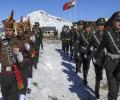
China and India were able to "reduce differences" and build "some consensus" on disengaging troops from friction points to end the standoff in eastern Ladakh and agreed to maintain dialogue to reach a resolution acceptable to both sides at an "early date", the Chinese defence ministry said on Thursday.

'If the Chinese were keen to mend fences with India, they would merely have to withdraw their troops in Eastern Ladakh.' 'They have not done so and they have not said that they will do so.'
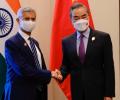
India and China are likely to hold the 16th round of high-level military talks on July 17 to resolve the issues in remaining friction points along the Line of Actual Control (LAC) in eastern Ladakh, people familiar with the development said on Wednesday.

Prime Minister Modi and President Xi held the conversation on Wednesday on the sidelines of the BRICS (Brazil, Russia, India, China, South Africa) summit in Johannesburg.

Instead, Chinese Premier and Xi's confidant Li Qiang will take part in the summit to be held on July 6-7 in which Prime Minister Narendra Modi was expected to take part.
'India will always remain indebted for their supreme sacrifice. Entire nation and Modi government stands firmly with their families in this hour of grief. Praying for the speedy recovery of those injured,' he said.

Amid the ongoing military standoff with China in Eastern Ladakh, Lieutenant General Anindya Sengupta will take over as commander of the Leh-based Fire and Fury Corps this month-end.
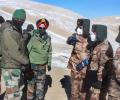
In the fresh round of talks, the Indian side is expected to press for disengagement of troops as soon as possible in all the remaining friction points besides seeking resolution of issues in Depsang Bulge and Demchok.
India and China on Thursday agreed to hold the next round of military talks at an early date to achieve the objective of complete disengagement in remaining friction points in eastern Ladakh.
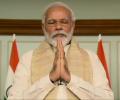
Modi said the sacrifice of Indian soldiers killed in the Galwan Valley clash in Ladakh will not go in vain.
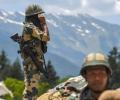
If it were moments of shock and anxiety on the day when the news about the clash in Galwan Valley in eastern Ladakh was flashed by TV channels, a call from the Army confirming he was safe and then followed by Vishnu's own calls and the video chat overjoyed his family.

Families spread across the nation bid their final goodbyes to the soldiers killed in hand-to-hand fighting with Chinese troops in Ladakh's Galwan area. People gathered in large numbers to attend the last rites of the soldiers.
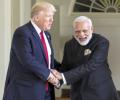
In the conversation, President Trump extended an invitation to Modi to attend the next G-7 summit to be held in the US, the Ministry of External Affairs said. On Saturday, Trump pitched for expansion of the G7 comprising the world's most advanced economies by including India and three other countries.
India and China on Tuesday agreed to hold the next round of the Senior Commanders meeting at an early date to achieve complete disengagement from all friction points in eastern Ladakh to create conditions for the restoration of normalcy in bilateral ties.

Wang began a two-day trip to Pakistan on Tuesday primarily to attend a meeting of the Council of Foreign Ministers of the Organisation Islamic Cooperation (OIC) as a special guest.

Disengagement from the LAC will remain a chimera because China has given enough indications that the PLA will not move back any more. China has even deployed drones to monitor and deny any patrolling by Indian troops even in the buffer zones which are all in Indian Territory, explains Lieutenant General Prakash Katoch (retd).

The Army has also further bolstered overall surveillance mechanisms in all areas along the Line of Actual Control (LAC) in eastern Ladakh after foiling China's fresh attempt to occupy an area on the southern bank of Pangong lake, they said.
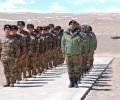
Chinese foreign ministry spokesperson Mao Ning told the media in Beijing on Monday that the two sides held an in-depth exchange of views on expediting the resolution of relevant issues.

China is set to build a rail link connecting Xinjiang province with Tibet, part of which will run near the Line of Actual Control (LAC) with India.

Jaishankar said, "The immediate part which awaits us is what we call the de-escalation, which is the build-up of forces along the Line of Actual Control."
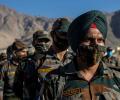
Calling the 'events' along the Line of Actual Control (LAC) very disturbing, the external affairs minister said they have raised some very 'basic concerns'. When asked whether it will be a long-haul or a breakthrough is expected soon, Jaishankar said: "I would not go into prediction zone at all whether it is going to be easy or not, and what will be the timelines and so on."
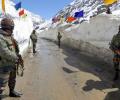
No one is in a critical condition as of now, all are stable, said Indian Army sources.
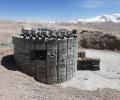
In a major technology push, Indian Army has envisioned construction of "permanent defences" along the Line of Actual Control in eastern Ladakh using cutting-edge 3D printing technology, a move that will save time and improve its defence preparedness, sources said on Tuesday.

Chinese ambassador to India, Xu Feihong, on Wednesday expressed hope that the recently completed Indo-China border disengagement in Eastern Ladakh would smoothen relations and pave the way for a better understanding between the two neighbours in the days ahead.
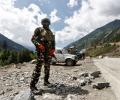
At a virtual media briefing, Ministry of External Affairs (MEA) Spokesperson Anurag Srivastava said disengagement of troops is a complex process which would require mutually agreed 'reciprocal actions'.
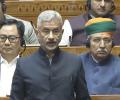
Jaishankar said India-China ties have been abnormal since 2020 when peace and tranquillity in border areas were disturbed due to Chinese actions.

India and China are likely to hold another round of diplomatic talks this week on eastern Ladakh with a focus on moving forward in disengagement of troops in the remaining friction points, people familiar with the development said on Tuesday.
Sources said the Indian troops resolutely confronted the Chinese PLA soldiers.
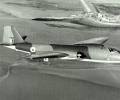
Chief of Defence Staff General Anil Chauhan says the Indian Air Force would have slowed the Chinese offensive considerably during the 1962 War.
"I still have not heard a credible explanation as to why they chose to bring that size of forces to that sector of our border. Now, if peace and tranquility is disturbed and attempts are being made to change the LAC status quo unilaterally and large forces are brought to the border in contravention of written agreements, then obviously the relationship will be impacted," he said.
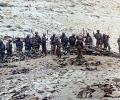
"We have seen movements in training areas. It is an annual exercise. They come for training. We also go to training areas. We have been keeping a constant eye on it. We have forces along the LAC and they are adequate to deal with any action or activity," Gen Naravane told India Today channel.

In an interactive session at a think-tank in Paris, Jaishankar said he was optimistic about resolving the issue through dialogue and that significant headway has been made in many of the friction points.
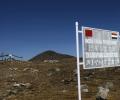
China's Ministry of Civil Affairs on Sunday released standardised names of 11 places for Arunachal Pradesh, which it calls "Zangnan, the southern part of Tibet".
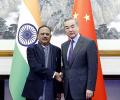
He said that in recent times, based on the important consensus reached by the leaders of the two countries, China and India have maintained close communication on the border situation through diplomatic and military channels and achieved great progress.

India and China on Monday decided to resume the Kailash Mansarovar Yatra as the two sides agreed to take certain people-centric steps to 'stabilise and rebuild' ties.

India and China made progress in five-six friction points along the Line of Actual Control in eastern Ladakh through talks in the last three years and efforts are underway to resolve the remaining issues, External Affairs Minister S Jaishankar said on Monday.

The meeting comes against the backdrop of demands by the opposition seeking details of the violent face-off between Indian and Chinese troops in the Galwan Valley in Ladakh which left 20 Indian Army personnel dead.
